
Under the motto “If we can, we will, again” the Provincetown Tennessee Williams Theater Festival announced its 16th Season: Tennessee Williams & Censorship.
Rising to the challenge of presenting live theater this year, the companies invited to perform in Provincetown agreed to stay home and perform in place. These productions were shown live and outdoors around the country during the four days of the festival, each working with state and local guidelines to shape the possibilities of holding live events safely and responsibly from September 24 through 26, 2021.
The festival’s 2021 will be a season of plays related to censorship written by Williams and other writers. The theme was prompted by the 400th anniversary of the Mayflower’s arrival in Provincetown, or rather it’s departure five weeks later, “leaving Cape Cod’s curling sandspit to spiral into the Devil’s playground,” as Festival Curator David Kaplan says, “and begin the 400-year-old tradition of independent thinking, what the Puritans called ‘flaunting,’ that continues today.”
The Festival’s censorship theme had been in the works for five years, following the invitation by Lisa Giuffre at Provincetown 400 to be part of the town’s commemoration of the Mayflower’s arrival in November of 1620. “In thinking it over, the Mayflower leaving was what defined P’town, and the attempts to find continuity with the puritans were a fantasy. Using the same facts, it is possible, and desirable, to create another fantasy that predicts not the Constitution, but the writing of Tennessee Williams and America’s other wayward writers, including the provocations of Mae West, Penny Arcade, and any other future ‘flaunting’ we might imagine.”
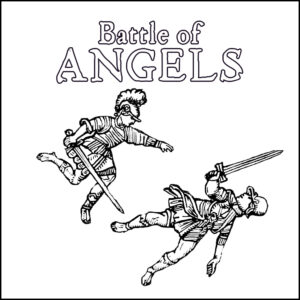
by Tennessee Williams
A MORALITY PLAY
Three women fight over a handsome stranger who newly arrived in their Mississippi Delta small town. Written by Williams in 1940, ‘Battle of Angels’ was closed by order of the Boston League of Decency. ‘A play about cheap, white trash….Indecent and improper….Lascivious and immoral…’ -Boston Police Commissioner Timilty, 1940
An abbreviated presentation Directed by Jessica Burr and Produced by Blessed Unrestdipiscing elite
“Low and common”
-Joan Crawford
(declining the offer to play the role which had been enlarged to make the play more attractive to her)
“Putrid”
-Unnamed (but outspoken) Boston City Councilman
The battles Tennessee Williams fought and lost with Hollywood censors are famous. Displays of a woman’s lust or the outburst of a man’s gay ways were chopped off (despite the author’s protests) in order to release the money-making films adapted from Williams’ Broadway hits: A Streetcar Named Desire, Cat on a Hot Tin Roof, and Sweet Bird of Youth.
Battle of Angels is the play that began Williams’ battle with censors. A production of Battles was meant to hit Broadway after a Boston try-out in 1940. Though not exactly banned in Boston, its run was cut short after the Boston City Council demanded an investigation. “Lascivious and immoral” reported Boston Police Commissioner Joseph F. Timilty. The show’s star Miriam Hopkins responded “The dirt is something in the minds of some of the people who have seen it. They read meanings into it according to their own suppressed feelings.”
For the play to continue in Boston, censors demanded certain lines be cut, including: “All references to [the] deity and Christ,” and “to [the] stigmatae” on the hero’s hands. A painting of the hero which resembled Jesus started a scandal of its own among those in the audience who hadn’t been following the plot and thought a portrait of their Savior was being desecrated. A temporary solution had been to put the painting in a closet. Eventually the painting was changed so it looked nothing like Jesus. Then it could be destroyed in Boston without offense.
When Margaret Webster, the original director of Battle, returned to Boston to watch the censored version in performance she wrote to say she “found a castrated and largely incomprehensible edition of the play dying an inevitable death at the Wilbur Theatre.”
An abbreviated presentation based on the uncensored text will be presented by Blessed Unrest, directed by Jessica Burr. Blessed Unrest is a subversive physical theater ensemble that has been creating award-winning original theatre in NYC and touring internationally for twenty years.
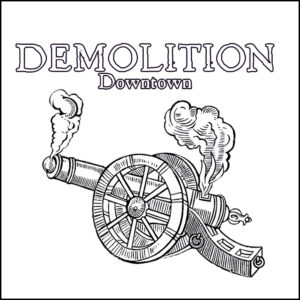
by Tennessee Williams
A SUBURBAN DRAMA
A suburban family shuts themselves up as explosions rock the city. Can the revolution be ignored?
Directed by Brenna Geffers
“Act as if nothing had happened….Don’t say ‘seized.’ Say ‘took over.’”
-Tennessee Williams’ The Demolition Downtown
As explosions in the city rock the house in the suburbs where Mr. and Mrs. Lane live, the television goes blank and gives off a crackling sound when they try to watch the news. Their two young daughters are home; a new government has converted schools to barracks. Mr. and Mrs. Lane mention these things fleetingly, if at all. Their sentences break off. They correct each for polite ways to talk about – or rather, avoid talking about – what’s happening.
The newspapers have stopped delivery, the radios have stopped broadcasting. Or to be precise: been stopped.
At the time the play was published in the June 1971 issue of Esquire magazine, news of the on-going war in South-East Asia was censored in America, in Viet Nam, in Russia, and in China according to different criteria: the need to boost morale by censoring news of defeat, or the censoring done to hide international support and collaboration.
Silencing group knowledge is an aspect of seizing power. In this play and many others, Williams called attention to another aspect of censorship, the polite circumlocutions in private conversations. Emphasizing conformity, the names of the characters rhyme. The Lanes, their neighbors the Kanes and the Paynes, president Stane (who has “surrendered to the, uh, new regime”), and the old Hugh Wayne who has been ordered to the Municipal Abattoir “An abattoir is a sort of a slaughter pen.” Mr. Lane explains to Mr. Kane, added the Lanes had only the barest acquaintance with Wane. The Municipal Abattoir is title and subject of another earlier play by Williams, whose roots go back to the conformity of the Nazi wartime propaganda and American factory-lines.
The Festival’s production of The Demolition Downtown is presented by Philadelphia-based DieCast ensemble, directed by Brenna Geffers.
Die-Cast is a collective dedicated to breaking open the relationship between audience and art by creating work for unique and non-theatrical spaces. Founded by Brenna Geffers and Thom Weaver, Die-Cast concentrates on the power of the ensemble in space.
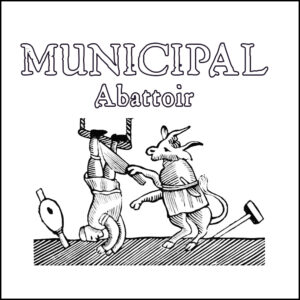
by Tennessee Williams
A THRILLER
From Nazi Germany to a factory in St. Louis to the Vietnam War, Williams considered the ways in which someone would agree to be destroyed for the good of the state.
Starring Ben Berry, David Drake, Ian Leahy, and Darlene Van Alstyne.
Directed by David Kaplan
“Condemned for interfering.”
-Tennessee Williams’ The Municipal Abattoir
“Your hearts belong to the state!”
-Tennessee Williams’ Acts of Love
“For the good of the state!”
-Tennessee Williams’ poem “The Death Embrace”
An abattoir is a slaughterhouse. Like the more recognizable word abate, the French abattoir derives from a Latin root: bat, the English beat, as in to beat down. Williams connected this to factory work, where mindless repetition beat down the soul. The Municipal Abattoir of his imagination is a state-run slaughterhouse, where good citizens when summoned, go willingly to be killed.
Williams’ play positions a government clerk on route to the abattoir, summoned there for asking a question: did a squirrel – or was it a chipmunk? – running on a treadmill in a shop window, ever get a break? Perhaps the clerk has been summoned to the abattoir because he sent an appeal to the government when his daughter was drafted into the Municipal Whorehouse.
Appeals and questions are traitorous and ultimately stifled in the world of William’ play, as they were around the world when the idea of a Municipal Abattoir first occurred to Williams in the 1930s. Germany, Russia, Japan, and America required the discipline of citizens suppressing themselves for the greater good as they prepared for the inevitable second World War. After the narrator of Williams’ Glass Menagerie scribbles a poem on a shoebox lid he will be fired; he has interrupted the shoe factory’s efficiency. The ruthless efficiency of a state-run crematorium is the subject of Williams’ 1940 poem “The Death Embrace” spun off from Acts of Love, his 1930’s play with chorus and Spanish dancers in which guards say to factory-workers “Your hearts are doing the goose-step!”
Williams continued working on The Municipal Abattoir through the 1960s, when self-denunciations and public executions fueled the Cultural Revolution in Maoist China. Viva! shouts the abattoir-bound municipal clerk as the procession of a military dictator passes by. Viva la muerte! shouts a woman in black in Acts of Love. “Assassination is the extreme form of censorship,” George Bernard Shaw tried to say as part of his 1909 Statement of Evidence to the Joint-Committee on Stage Plays: Censorship and Theatre Licensing. Shaw was not allowed to submit his statement.
The Festival’s production of The Municipal Abattoir is staged by Festival Curator David Kaplan.
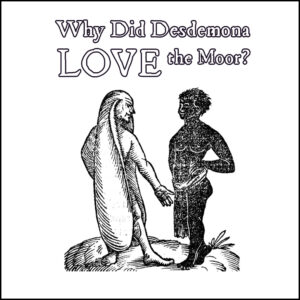
A LOVE STORY
A black screenwriter has a secret affair with a white movie goddess (alternate title: “The Bitch”). Williams abandoned the project after 75 manuscript pages.
Adapted by Thomas Owen Mitchell, a staged reading of an unfinished short story from the 1940s (published March 2020) dramatizes Williams’ process as he considered drafts of a short story, a play, and a possible film.
Directed by Thomas Owen Mitchell
“Forbidden” for “the portrayal of sex relationships between the white and black races.”
-The Motion Picture Producers and Distributors of America’s Production Code, 1930
“Illegal” for “depicting or dealing with, the subject of sex degeneracy, or sex perversion.”
-New York State Wales “Padlock” Law, 1927
A black man having an affair with a white woman had little chance of being seen onstage in America when Tennessee Williams began writing the short story titled “Why Did Desdemona Love the Moor?” in 1939. Nevertheless, Williams continued working on the story in Provincetown in the summer of 1940. In Mexico that fall he wrote a letter to a friend about the “ story which is developing into a novel and may develop further into a play.”
“The Desdemona thing” as Williams called it in another letter, never did develop the way Williams hoped it might, though over the next few years he typed over a hundred and twenty manuscript pages. He created dialogue for a play and described camera set-ups for a possible movie. Neither film nor play could ever have been produced at that time. The Motion Picture Code forbid “sex relationships between the white and black races.” And if there had been a play, it couldn’t have played New York because the Wales “Padlock” Law prohibited depicting or “dealing with” gay characters, and in Williams’ “Desdemona thing” an openly gay man introduces the black man and the white woman to each other – on a movie set. She is the film’s white star, he is the film’s black author.
As would happen throughout his career, Williams was writing something for an audience that didn’t yet exist, imagining a project for a theater and film industry that might exist in the future. If the certainty of legal censorship may have curtailed his imagining, by the time the laws had changed Williams had himself dropped the project. Self-censorship? In today’s cancel culture, Williams’ free use of racial and homophobic slurs, and his misogynistic alternate title – The Bitch – might still not find an accepting audience.
The Festival’s staged reading of “Why Did Desdemona Love the Moor?” adapted and directed by Thomas Owen Mitchell, dramatizes Williams’ changing ideas.
A ROCK ‘N’ ROLL MANIFESTO
Since her stint at the Sacred Heart Academy for Wayward Girls, Penny Arcade has been unapologetically honest throughout her six-decade career of incisive avant-garde performance.
Her willingness to speak truth to power at the expense of career concerns has made her an international icon of artistic resistance.
Performed by Penny Arcade with her long-time collaborator Steve Zehentner.
“We who fled the myopic, claustrophobic, Puritanism of America’s interior, breathed free though ragged in its harsh embrace.”
-Penny Arcade’s Longing Lasts Longer
“It was actually recommended to me… (pause) that I add a trigger warning to the top of this show so that I didn’t traumatize anyone under 47 — you know, people who are not familiar with satire, irony.”
-Penny Arcade’s Longing Lasts Longer
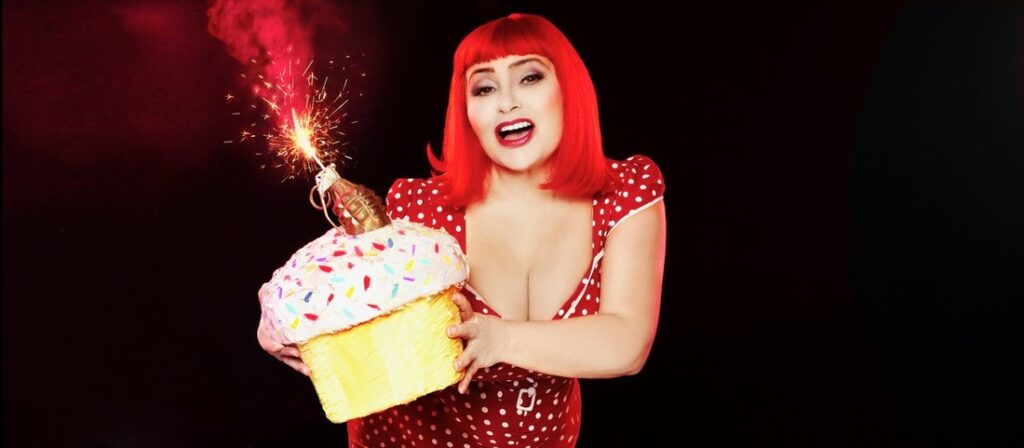
Penny Arcade, born Susana Ventura in 1950, has been a voice in the wilderness since running away from home at 13. After a stint in the Sacred Heart Academy for Wayward Girls, a reform school, she was released at 16 and spent the summer homeless in Provincetown. At 18 she made her way to New York City, where she joined Andy Warhol’s Factory, the Theater of the Ridiculous and began seven decades of speaking her mind in avant garde spectacles performed throughout the world.
What she performs has been a target for self-righteous censorship from the time she began — and the attacks continue. Justifications may have changed, the aim remains the same: to silence her. There were bomb threats from Catholic zealots and for many years respectable newspapers and magazines would or could not print the title of her signature work about censorship, Bitch! Dyke! Faghag! Whore! which she began working on in 1990.
They were not the only ones who disapproved. Penny explains in an interview with Zora von Burden:
“Both feminist academics and the art scene looked down on women who did erotic dancing and it was certainly not considered an art form or a self-empowering feminist economic option. Posters of Bitch!Dyke!Faghag!Whore! were torn off the street and the walls of clubs, shops, and university campus bulletin boards, and decried as offensive.
B!D!F!W! was my queer backlash to the politically correct New York art scene in 1990 during the National Endowment for The Arts Censorship Crisis… B!D!F!W! kicked off the pro-sex feminist backlash. It was a critique of the Christian Right as well as a fuck you to the politically correct, “gay community” and art scene in New York that sucked up for approval to the funding institutions run by the middle classes.”
Penny Arcade might say with Mae West, “Censorship made me.” It’s fueled her creativity and her understanding of herself: unstoppable, sexy, funny, and unapologetically honest.
Longing Lasts Longer is her latest revelation, performed with her long-time collaborator Steve Zehentner.
A FILM & COMMENTARY
Hollywood censors demanded more and more cuts to the film of ‘A Streetcar Named Desire,’ until Williams and the film’s director wouldn’t agree to any more edits. What the censors insisted on removing?: Stella’s open desire for Stanley.
Festival favorite and Williams scholar Jeremy Lawrence passes on author Sam Staggs’ revelatory ‘When Blanche Met Brando’ in this lecture/demo with the film.
Based on the book “When Blanche Met Brando” by Sam Staggs. Featuring Jeremy Lawrence.
“Too carnal.”
-The Legion of Decency
“I have the same right to say that moral considerations have a precedence over artistic considerations as you have to deny it.”
-Martin Quigley, co-author of the Motion Picture Production Code, to Elia Kazan, the director of A Streetcar Named Desire
Making a film out of A Streetcar Named Desire in 1951 was asking for trouble. The adaptation of the 1947 Broadway hit needed approval from the Motion Picture Production Code office, and there were objections at once. Williams and the film’s director Elia Kazan, who staged Streetcar on Broadway, skillfully managed negotiations over matters they had known in advance would be problematic: a gay character spoken of off-stage, a woman who enjoyed sex outside of marriage, rape.
The editing of the film began new arguments. Kazan and Williams wheedled, compromised, and sometimes persuaded the representatives of the Code to balance artistic considerations with moral concerns. After the film was completed further cuts were demanded by the Catholic Legion of Decency. At a certain point in the editing process Kazan and Williams refused to participate further. They had compromised enough.
The final edit was supervised by co-author of the Code, Martin Quigley, who guided editor David Weisbart. Weisbart did as ordered, but after removing what offended Weisbart spliced the ends of what remained with jump cuts, rather than dissolves, which would have been difficult to undo. Weisbert secretly stored what he had cut, and attached what he had removed in place with the original nitrate version. Had he hopes the cuts would be restored?
In 1989 Michael Arrick, then Warner Brothers director of preservation, stumbled over the clips in a mismarked can in a storage vault. The censored parts of Streetcar were restored and the film was rereleased in 1993 at art houses and on DVD. That’s the only version available now.
What was cut? What was removed was not, as might be expected, mostly footage of Blanche, but footage of Blanche’s sister, Stella, played by Kim Stanley. The reaction shots, when Stella looked at her husband with the lust, are what were cut. And, of course, there was still some footage of Blanche to be chopped out.
In 2005, author Sam Staggs compared the two versions preparing for his exhaustively researched book When Blanche Met Brando. Working from Sam Staggs’ notes and video collection, actor and scholar Jeremy Lawrence shows the before and after, and how the cuts to Streetcar are at the center of the Festival’s 2015 focus on Tennessee Williams and Censorship.
by Thomas Middleton
A JACOBEAN OUTRAGE
Written by Thomas Middleton in 1616 but not published until 1728. Why? English Puritans likely played a part, as some puritans believed plays were “Suckt from the Devilles teate.”
The 2020 spectacle adds to the play’s laundry list of indiscretions with an all-female cast made up of Mayflower women. Puritan women! dressing as men! performing plays! in the woods! — it’s unheard of!
A scene spectacle
Directed by Megan Nussle
“Great Mischiefs.”
-Massachusetts Bay Colony Act to Prevent Stage-Plays, 1750
“The woman shall not wear that which pertaineth unto a man…for all that do so are an abomination unto the Lord thy God.”
-Deuteronomy 22:5, King James Bible
For Thomas Middleton to title his 1616 satire The Witch and have spells cast onstage was a deliberate provocation. For almost a century, those intent on censoring blasphemy in England had been pointing to just such outrages as a good reason to shut down English theaters. “Stage plaies were suckt from the Devilles teate, to Nurce up Idolatrie …the Sacrifices of the Devil, taught by himself to pull us from the service of our God,” wrote some influential zealot whose name let’s agree to forget.
Another play by Middleton was censored for offending the King of Spain, but The Witch went on without a hitch at London’s Globe Theater, performed by the King’s Men, the company that presented Shakespeare’s premieres. The manuscript of The Witch, copied by the Globe scribe and carefully stored, wasn’t published until 1778. What explains the 160-year gap? Middleton called The Witch “ignorantly ill-fated.” Was he thinking that when the Puritans came to power they would close all the theaters in England? He didn’t live to see that happen, but it did.
By 1620, the time of the Mayflower’s arrival in Massachusetts, censoring stage performances had a long history and would have a bright future, not only in England but in New England. In the Massachusetts Bay Colony a law preventing the performances of plays fined actors and spectators, and whoever provided a venue for “theatrical entertainments, which … tend generally to increase immorality.”
There were, of course, New England provocateurs. When Thomas Morton left Plymouth Plantation to set up the Colony of Merrymount, for two years running he erected a maypole around which Englishmen danced with indigenous women. “Ye beastly practices of ye mad Bacchanalians,’ sniffed Governor Bradford who ordered Morton put in chains, then marooned on an island.
The festival production of The Witch, performed by local ladies under the direction of Megan Nussle, imagines a version of Middleton’s text performed by the women of the Mayflower on their first-day off-ship, doing laundry and whiling away the drying time with the abomination of having women dress as men. There will be a maypole.
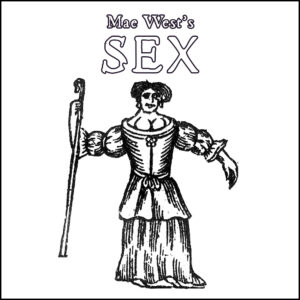
A TITILLATING COMEDY
Mae West’s first play was shut down for obscenity and got her thrown into jail for ten days. Until then ‘Sex’ was the best-selling play of the 1926 Broadway season, running ten months. Most of the police waiting to escort Mae to the clinker had already seen the show.
The laws enacted to censor her in New York and Hollywood were used years later to censor Tennessee Williams.
“I believe in censorship. After all, I made a fortune out of it.”
-Mae West
“Crude.”
–The New York Times
“The Babe Ruth of stage prosties.”
–Variety
The Festival’s production would have come from Seattle’s Play Your* Part under the direction of Michael Raimondi.
Play Your* Part is dedicated to inspiring action through captivating theatre – increasing equity and reducing violence, locally and globally.
We look forward to the possibility of presenting Play Your*Part in 2021
by Bertolt Brecht, Kurt Weill, and Elisabeth Hauptmann
MUSICAL AGIT-PROP
Hitler’s thugs blew whistles at the 1927 premiere of this chamber opera. Communists in the audience blew whistles of their own. Kurt Weill wrote the music, Bertolt Brecht wrote the libretto, and Elisabeth Hauptman collected the material from natural disasters and the cycle of capitalism.
“Schmutz! [Filth!]”
–Zeitschrift für Musik [‘The Gestapo Music Magazine’]
“Ugly and mean.”
–The Baden-Baden Morning Gazette, 1927
The Festival’s production was planned to come from New Orleans performed by the AllWays Lounge in Exile, directed by Dennis Monn, and the complex score led by piano virtuoso Harry Mayronne, Jr. Their crowd-pleasing past productions include Threepenny Opera and Happy End, all with music by Kurt Weill and texts also credited to Brecht, but mostly written by Hauptmann.
The award-winning AllWays Lounge Players, including piano virtuoso Harry Mayronne, Jr., has collaborated for a decade. The Mahagonny Songspeil will be their 3rd “downtown” take on a Weill/Brecht/Hauptmann work.
We look forward to the possibility of presenting the AllWays Lounge Players in 2021. If you don’t bring your own whistle, we’ll be handing them out.
Provincetown Tennessee Williams Theater Festival, P.O. Box 1721 Provincetown, MA 02657
David Kaplan, Curator
Charlene A. Donaghy, Producer
Kenneth Abert, General Manager
Tel. 866-789-TENN
Copyright © 2006–2021 by Provincetown Tennessee Williams Theater Festival. All rights reserved.